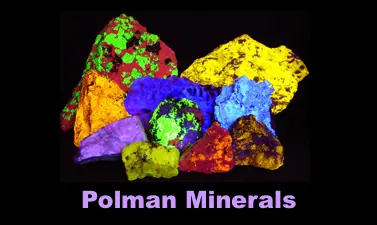
49 new fluorescent minerals to United States Showcase
Today I have added 49 new specimens to the United States Showcase Page of my website. A description of some of the small batches is provided below.
Topaz, Zapot Mine, Near Hawthorne, Mineral County, Nevada – Some years back very nice specimens of topaz were mined from the Zapot (topaz spelt backwards) mine in Nevada. Large crystal specimens were selling for top dollar. I was able to purchase a flat of the smaller crystals from the dealer who had them. After that year I had heard that the mine owners were in a legal dispute, and I have not seen these specimens for sale since. Hopefully, some day they will continue to mine these wonderful topaz specimens.
Calcite, Terlingua, Texas – In the 80s when I purchased a large portion of the sales stock of the late Tom Warren (Mr. Tom), I obtained a large amount of the classic calcite from Terlingua, Texas. For this Showcase I decided to add some calcite specimens from Terlingua that fluoresce creamy yellow/creamy white for people to round out their Terlingua collections.
Opal, Manhattan Mine, Knoxville, Napa County, California – Many years ago I purchased a large quantity of this opal from an elderly man in California. I would have to go back deep into my records to remember his name, but unfortunately, he passed away shortly after my purchase. This opal is yellow in white light (very unusual and rare) and will fluoresce a bright yellow under all three wavelengths. Specimens that are gemmy yellow are more valuable than others. Some specimens contain a green fluorescent opal as well. This mine has been closed for years, and the area that this opal was found in has been completely mined out. In this Showcase I decided to add several smaller affordable specimens for people who do not have a specimen of this opal in their collections.
Scapolite, Valyermo, California – When I purchased a large portion of the sales stock of the late Tom Warren, included in that purchase was a large supply of this scapolite. I think I have been the only dealer with this material for sale since. I am not sure if analysis has been done to determine which species in the scapolite group this is, but it has been labeled just scapolite for many years. Fairly recently a good friend of mine finally, after much research, found the locality. He has told me that this scapolite is currently on private property in a guarded gated residential community and that the locals are very touchy about unauthorized visitors. So, at this point I think it’s safe to say that the stock I have for sale could very well be all that will be available.
Wavellite, Mt. Ida, Montgomery County, Arkansas – Going through my sales stock recently I found a flat of small wavellite specimens that fluoresced green. The green fluorescent response is most likely caused by uranyl ions. In white light the wavellite is white to pale yellow in color.
I will begin the photography soon for a new Showcase update. I have not yet decided on what to photograph, but I am leaning toward another Horn Silver Mine update. As always, those on my email list will be notified the moment these new specimens are uploaded to my site.